Couples have far more choice than chicken or fish on a formal plated menu. We have seen elegant table service, wonderfully noisy family-style meals, barbecue buffets and late-night pizza all make people very happy. The decision becomes easier once you separate two questions. What would you love to eat? And who will handle everything required to serve it safely and smoothly to a room full of people? That second question is where the difference between full-service catering and restaurant takeout becomes much larger than the food.
Full-service catering and takeout include different things
A full-service caterer usually provides a meal and the operation around it. Depending on the package, that can include menu planning, food preparation, transport, temperature control, kitchen or prep equipment, serving dishes, staffing, table service, clearing, waste handling and coordination with the venue and other vendors. Some also arrange linens, china, glassware and flatware. You are paying for food, but you are also paying for people to take responsibility for dinner.
Restaurant takeout or delivery gives you prepared food. Once it arrives, responsibility may pass to you. Someone must confirm the order, receive it at the right time, check that everything arrived, keep hot food hot and cold food cold, transfer it into serving dishes, label it, replenish it, clear tables, pack leftovers and deal with the trash. If the restaurant supplies disposable plates and serving utensils, check whether they suit a wedding-sized crowd rather than a family meal.
Drop-off catering sits between those options. A caterer may deliver the food in suitable pans, set up a buffet and provide warming equipment, then leave before service begins. That can reduce staffing costs while giving you a more event-ready handoff than standard takeout. You still need named people for service, guest questions, spills, clearing and cleanup. “We will figure it out” has a habit of becoming “the wedding party is scraping plates in formalwear.”
None of these options is automatically better. Full service buys support and accountability. Takeout can offer favorite local food, flexibility and a lower starting price. The useful comparison is the complete plan, including every job and rental needed after the food leaves the kitchen.
A plated dinner creates a structured evening
With plated service, guests remain seated while each course is brought to the table. It can feel polished, keeps the dining room settled and gives the coordinator a predictable structure for speeches or other moments during dinner. It also allows portions to be controlled and each plate to arrive as the chef intended.
Plated meals usually require more servers, a workable staging area and accurate meal selections. Couples often collect entrée choices with RSVPs, then create place cards or a seating plan that tells staff where each dish belongs. Dietary meals must be clearly identified without making the guest feel like an administrative problem. Ask how the caterer handles late changes, missing meal selections and guests who sit in the wrong seat.
A buffet offers choice, with some planning behind the scenes
Buffets are familiar, flexible and often well suited to weddings where guests have different appetites. People can choose what they enjoy, and the menu can include several proteins, sides and vegetables without requiring an entrée choice months in advance. Buffet service can also feel relaxed without being casual.
Flow is the main challenge. A large wedding may need two serving lines, duplicate dishes and a table-release plan so the final guests are not waiting while the first tables finish eating. The buffet needs staff to replenish food, keep the presentation tidy, monitor temperatures and answer questions about ingredients. Ask whether servers clear plates from the tables. Guests rarely assume they are expected to carry dirty dishes around a wedding venue, and they should not have to guess.
Family-style service makes dinner social
Family-style meals place shared platters and bowls on each table. Passing food encourages conversation and creates a generous, lively atmosphere. It gives guests some choice while allowing everyone to remain seated. We love the energy it can create when tables begin talking, sharing and helping one another.
It requires enough table space for food, place settings, glasses and décor. Large centerpieces can quickly become an obstacle course. The caterer also needs plenty of serving dishes and enough staff to bring food out while it is hot, replace empty platters and accommodate dietary meals separately. Discuss portioning carefully, since one enthusiastic table can empty the potatoes before the next table has started.
Stations, grazing tables and food trucks change the rhythm
Food stations invite guests to move around and can make dinner feel more like part of the party. Different stations might serve pasta, tacos, seafood, carving dishes or regional favorites. They work best when there are enough points of service and the room has space for queues without blocking the bar, entrances or dance floor.
Grazing tables are lovely for cocktail hour and lighter meals, although they need attention to temperature, allergens and how long food remains on display. A beautiful board at 4:00 may be considerably less appealing after several warm hours and a hundred curious hands. Confirm who replenishes it and when the remaining food will be removed.
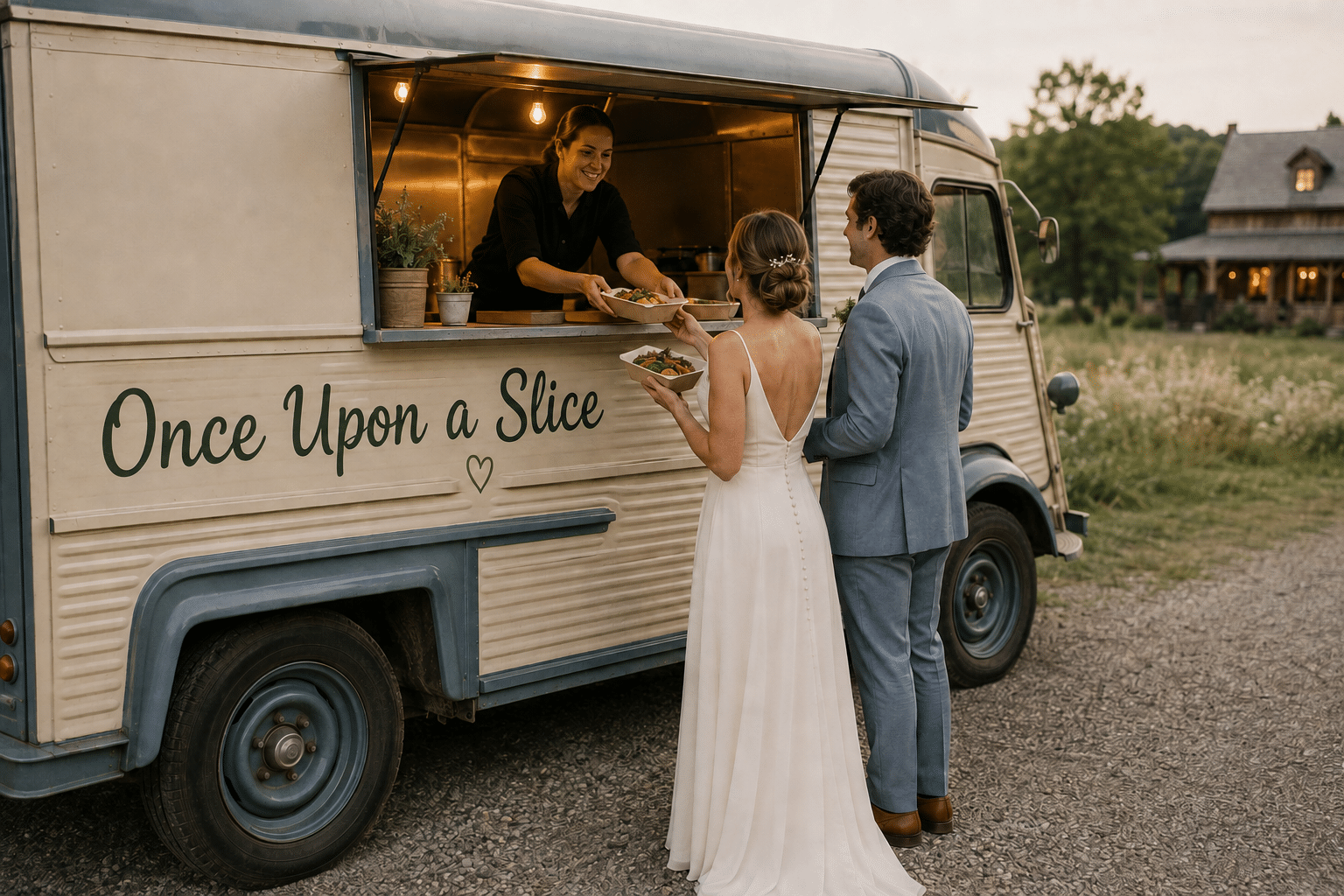
Food trucks can bring personality and excellent freshly prepared food. They also have a fixed production rate. Ask how many meals the truck can serve per hour, whether it can take advance orders and what happens in rain. One truck serving 150 individually ordered meals may create a very long dinner, however delicious the tacos are. Many weddings use a truck for late-night food or combine several trucks for the main meal.
Barbecue, pizza and restaurant favorites can work beautifully
Relaxed food still deserves a proper service plan. Barbecue may be offered through a full-service caterer, delivered as a staffed buffet or collected from a restaurant. Pizza can arrive for dinner, act as a late-night snack or come from a mobile oven on site. A favorite restaurant may create party trays or a custom package even if it does not advertise wedding catering.
Ask how the food travels and how quickly it should be served. Fried foods, dressed salads and delicate dishes may lose quality faster than braised meats, baked pasta or barbecue. Order enough serving pieces, plates, napkins and utensils, and have a backup plan for delayed delivery. If a friend or relative is collecting the meal, be honest about whether you want them leaving the celebration and carrying trays at the exact time everyone else is gathering for dinner.
Compare the complete cost, not only the price per person
A full-service quote may look high because it gathers many wedding expenses into one number. Takeout can look inexpensive because several of those expenses have not appeared yet. Compare the options using the same categories so you can see the true difference.
- Food, delivery charges, taxes, service charges and gratuities
- Cooks, servers, buffet attendants, captains and cleanup staff
- China, glassware, flatware, napkins, table linens and serving pieces
- Chafing dishes, refrigeration, ovens, grills, prep tables and other equipment
- Water, ice, coffee service, condiments and food labels
- Setup, table clearing, dish handling, leftovers, trash and final cleanup
- Insurance, permits and any venue-required licenses or staffing
Ask for a written list of inclusions and exclusions. If you are adding outside staff or rentals to a takeout plan, include delivery, collection and breakage fees. The final totals may still favor takeout, which is perfectly fine. At least the decision will be based on the wedding you will actually host.
Food safety and dietary needs deserve a professional plan
Wedding meals are often transported, held and served over several hours. Find out who is responsible for safe temperatures, clean serving utensils and the removal of food that has been out too long. Your venue may require licensed and insured food providers, and local health rules may limit food prepared in private homes. Confirm the requirements before paying a deposit or asking relatives to cook for a large crowd.
Collect allergies and dietary requirements early, then ask the provider how meals are prepared, separated, labeled and served. Vegetarian and vegan guests should receive a proper meal rather than a plate assembled from whichever side dishes happen to be safe. For serious allergies or medical restrictions, obtain a direct answer about cross-contact. A vague promise to “be careful” is not enough information for the guest or the couple.
Check what the venue can support
Ask what catering facilities are available at the venue. A residential-looking kitchen may be intended for light preparation rather than cooking dinner for 150 people. Check refrigeration, water, power, ventilation, prep space, loading access and the distance to the dining area. Food trucks need safe access, level parking and enough electrical capacity or permission to run generators.
Clarify who is allowed to cater, whether proof of insurance is required and where waste, grease and wastewater can go. Find out who cleans the food-preparation area and when everything must leave the property. These are ordinary venue questions, and getting the answers early can prevent an appealing menu from turning into an impossible setup.
At the Maine Wedding Barn, we encourage couples to discuss the service plan as carefully as the menu. Guests notice when dinner flows easily, and couples should be able to sit down and enjoy the meal they chose. If the plan relies on friends or relatives, give them defined, limited jobs and make sure they are comfortable taking them on.
Questions to ask before choosing your wedding food plan
- Who receives the food and checks the delivery?
- Who keeps it at safe temperatures before and during service?
- Who sets the tables or buffet and supplies every serving item?
- How many staff will be present, and what will each person handle?
- How long will it take to serve our guest count?
- How will allergies and dietary meals be prepared and identified?
- Who clears tables, handles dishes, packs leftovers and removes trash?
- What facilities and equipment does the provider expect from the venue?
- What happens if delivery is late, an item is missing or the guest count changes?
- What is the final estimated cost once staffing, rentals, fees and cleanup are included?
Choose who will handle dinner from setup through cleanup
Think about the food you enjoy serving people in real life and the atmosphere you want around the tables. Then build the service plan that allows that meal to arrive safely, on time and without quietly assigning a second shift to the people you love. A formal plated dinner can feel wonderfully relaxed when it is well run, and takeout can feel thoughtful and generous when every practical detail has an owner.
If a food truck serves dinner, test its hourly capacity
Ask how many complete meals the truck can serve in an hour using the proposed menu. A truck that has catered an event with 150 people may still have served them gradually across an afternoon. At a wedding, most guests become hungry at the same time. Request a wedding example with guest count, menu and total service time.
Keep the menu focused, consider more than one service point and release tables in groups. Plan shelter, lighting, level parking, power, water, waste and a route that does not block emergency or vendor access. Arrange table delivery or assistance for guests who cannot stand in a long outdoor queue. Food trucks can be excellent late-night providers because demand arrives gradually; serving the main meal requires a much more deliberate operation.
Choose food you enjoy and a service plan that takes care of guests from setup through cleanup. If everyone is fed well and nobody in the wedding party is tying trash bags at the end of the night, dinner has gone very well.