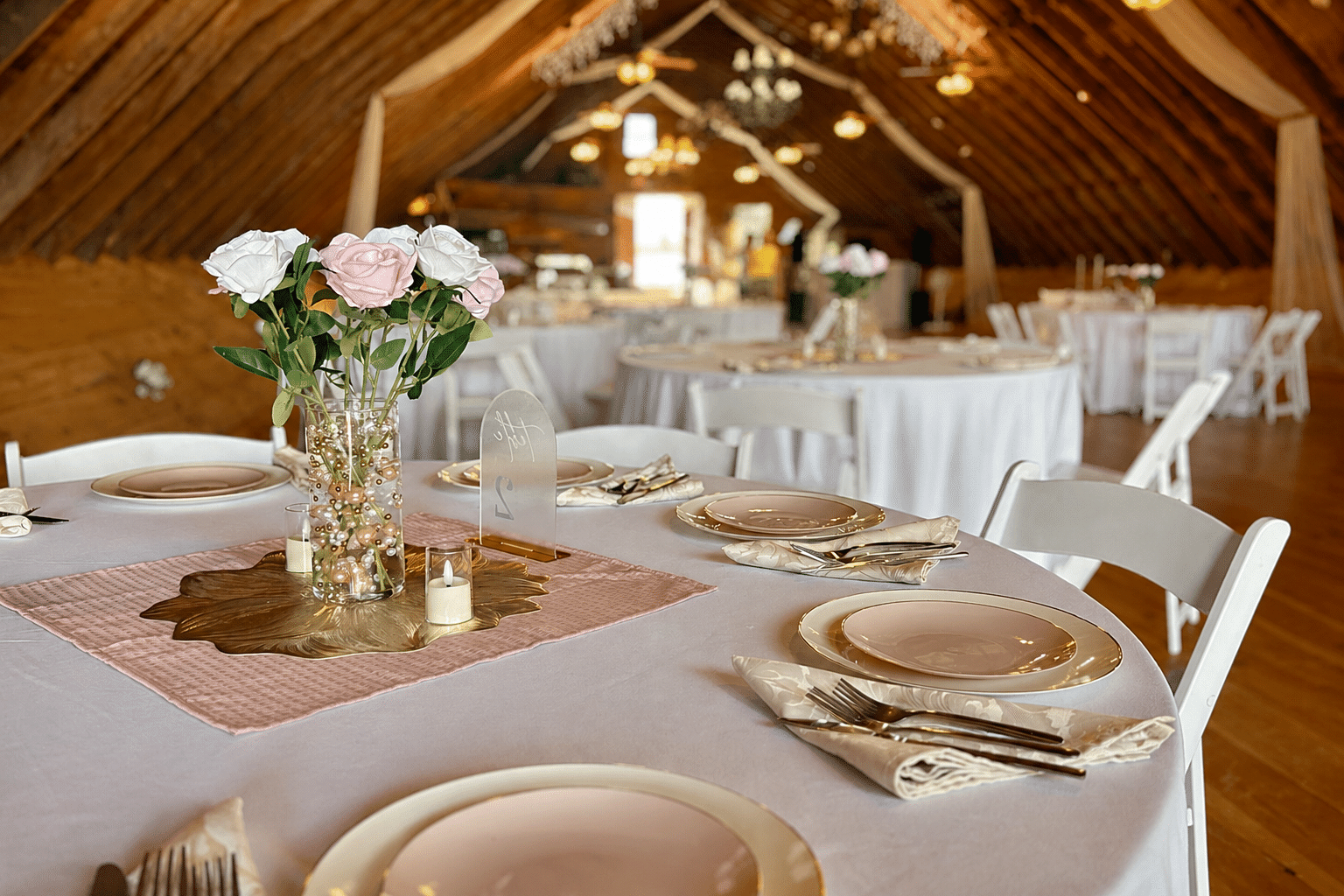
Wedding decor expands to fill whatever amount of time and money you give it. Before buying signs, lanterns, runners, arches, candles and enough small objects to open a seasonal gift shop, look carefully at the space you are decorating. Many of our couples feel relieved when they realize how much character is already there.
Choose a visual direction before buying objects
Start with a few words that describe how you want the wedding to feel. Warm and relaxed, colorful and playful, formal and candlelit, or simple and seasonal will give you more direction than a folder containing two hundred unrelated photographs. Add a restrained palette and a few materials that suit the venue.
Use reference images to explain mood rather than to create a shopping list. A photograph may work because of the room, the light and the scale of the flowers together. Buying the lantern in the corner will not reproduce the entire scene. Look for the element you are responding to, then decide whether your venue already provides some of it.
Let personal objects earn their place
Family photographs, handwritten notes, a textile from home, objects connected to a shared hobby or a ceremony piece with cultural meaning can give the day a history that rented décor cannot manufacture. Use them where guests have time to notice them instead of scattering sentimental items across busy service areas.
Cultural and religious objects deserve proper context and care. Ask who places them, whether they may be touched and where they go after the ceremony. They should feel connected to the people and tradition involved, rather than borrowed as visual shorthand for a theme.
Edit the plan inside the actual venue
Bring the décor list to a walkthrough and stand in each space. Check the scale of signs, arches and arrangements against the building rather than the close-up photograph used to sell them. Look at what guests will see when they enter, sit for the ceremony and find their tables.
Then remove anything that duplicates the venue’s lighting, furniture, drapery, landscape or architecture without improving it. At the Maine Wedding Barn, original timber, white drapery, warm lighting and mountain views already give the room a strong identity. Couples can add color and personal details without being asked to decorate an empty box.
Divide the venue into three levels of attention
Start with the spaces that appear in the ceremony, dinner and photographs. These usually include the ceremony focal point, dining tables, couple’s table, entrance and one or two gathering areas. Give those places the most deliberate visual choices. Next come functional areas such as the seating display, bar, guest book and dessert table. Decorate them when it helps guests understand or enjoy the space. Utility corners, hallways and surfaces nobody uses can usually be left alone.
Walk through the venue and photograph each area before buying anything. Note existing furniture, lighting, colors, views and architectural details. A barn with timber, draping and warm lights needs a different plan from a plain hall or tent. If the room already has personality, decor can support it rather than compete for attention.
Count the repeated items before choosing them
A small table detail becomes a large order when multiplied across twenty tables. Price centerpieces, candles, runners, table numbers and place settings using the final table count, plus a few spares. Then check the physical space. Family-style food requires room for serving bowls. A narrow table may have space for flowers or candles, though rarely an ambitious collection of both.
Think about height and sightlines. Guests should be able to see the people across from them, servers should be able to place food safely and candles should comply with venue rules. Ask the florist or venue to mock up one full table if you are considering a layered design. It is easier to remove three objects in a preview than from twenty completed centerpieces on the wedding morning.
Make flowers work more than once
Ceremony arrangements may be able to move to the reception entrance, couple’s table or bar. Bouquets can be displayed after photographs. A welcome arrangement can later frame the guest book or dessert table. Discuss the move with the florist and coordinator because large installations, water-filled vessels and fragile pieces are not always practical to relocate during cocktail hour.
Seasonal flowers and foliage can help the budget, but availability changes. Ask the florist to interpret your colors and mood rather than guaranteeing one exact bloom months ahead. Candles, textiles, greenery and lighting can create atmosphere without asking flowers to cover every surface.
Include labor in the decor plan
Every item has a journey. It must be purchased or rented, packed, delivered, unpacked, placed, removed and returned or stored. Make a setup list showing the item, location, photograph or instruction, responsible person and estimated time. “The family will do it” needs names and a realistic access window.
Rentals can reduce storage and resale work, especially for linens, arches, candleholders and larger installations. Buying may make sense for personal items you will reuse or quantities that cost less than rental. Homemade decor can be meaningful and beautiful. Finish it early enough that the final week is reserved for people, logistics and sleep.
Where to decorate first
- Decorate first: ceremony focal point, dining tables and the spaces used most in photographs.
- Consider next: entrance, seating display, bar, guest book, dessert and lounge areas.
- Leave alone unless needed: empty corners, secondary hallways and surfaces guests will barely notice.
- Confirm before buying: flame rules, hanging restrictions, electrical access, setup hours and cleanup responsibilities.
Set one decor budget and keep a running total that includes delivery, installation, rental deposits and removal. When a new idea appears, decide which existing item it replaces. That small rule prevents the plan from growing one attractive online purchase at a time.
Decide what happens after the wedding
Plan in advance whether decor will be returned, donated, sold, recycled or taken home. Assign vehicles with enough space and people who are still present at closing. Flowers may be offered to guests or local organizations when arrangements allow. A disposal plan keeps sentimental items safe and prevents exhausted families from inheriting twenty boxes without warning. Many of our couples at The Maine Wedding Barn also join our “share the love” program where they donate flowers to local nursing homes, VA facilities, etc. after their big day.
Use decor to make the venue feel more like you. A few deliberate choices will usually do that better than filling every available surface. If you are unsure, photograph the room from the guest entrance and from the dinner tables. Those views reveal where one strong arrangement will matter and where another small object will simply disappear.