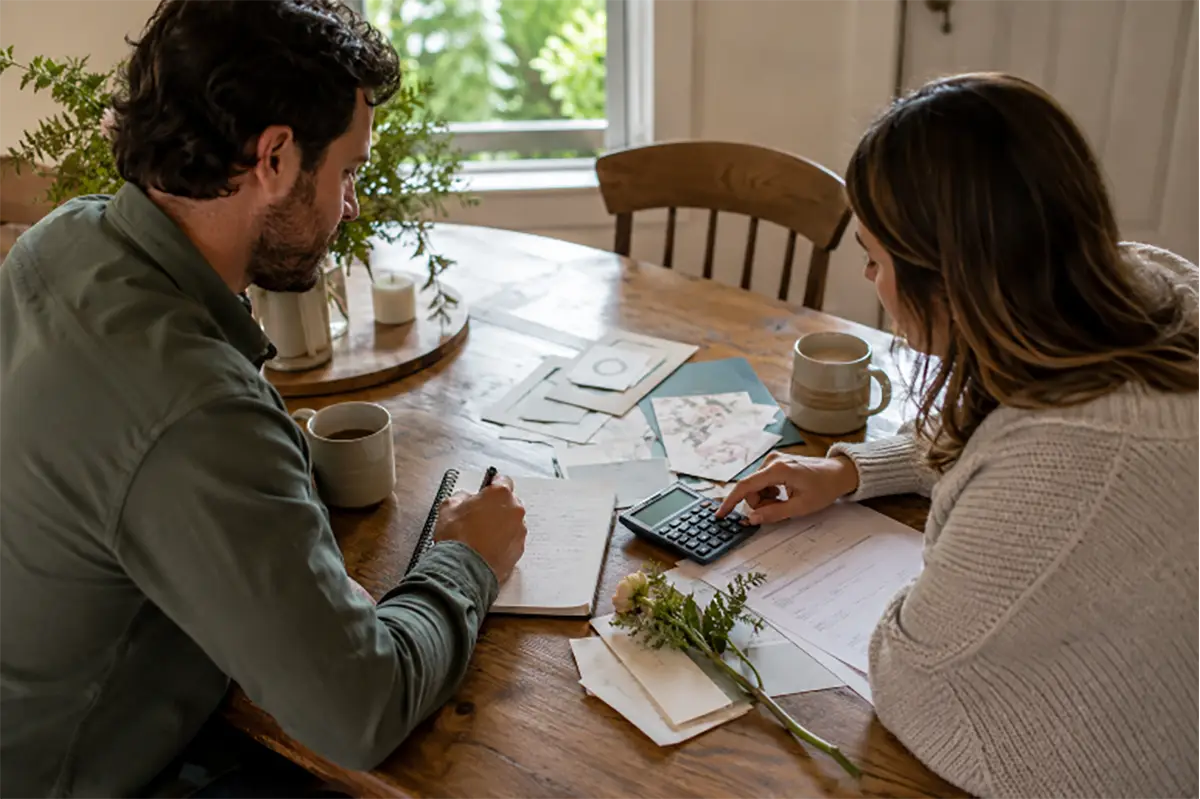
Wedding budgets have a slightly annoying habit of growing while nobody is looking. You choose a venue, then catering, photography, flowers, music, the bar and attire. A few weeks later someone is asking whether you want the napkins in sage, eucalyptus or dusty olive, and apparently this is now a financial decision. So, let’s start with the number you probably came here for.
For a wedding in Maine, a realistic starting range is often somewhere between $20,000 and $40,000, although plenty of celebrations land outside it. The Knot’s 2026 Real Weddings Study puts the national average at $34,200, while Zola’s latest research comes in at around $36,000.
Those numbers help establish the scale of the decision. They cannot tell you what your wedding will cost. Guest count, season, venue, food, drinks and the amount of work included in each package can move the total by tens of thousands of dollars.
After years around weddings, we have seen beautiful celebrations built with very different budgets. The happiest couples usually knew what they cared about, understood what they were paying for and felt comfortable ignoring a few things the wedding industry had assured them were essential.
Start with the number you can live with
Before collecting quotes, decide what you can spend without making the months before or after the wedding unnecessarily stressful. Include contributions from family once the amount has been discussed clearly. Weddings produce enough awkward conversations without vague promises of financial help joining the guest list.
Leave around 5% to 10% of the budget unallocated. Taxes, gratuities, alterations, delivery charges, overtime and the final week’s sudden need for twelve matching umbrellas all have to come from somewhere.
Then talk about what feels most important to the two of you. Some couples want everyone they love in the room. Others prefer a smaller guest list with a great meal, a photographer whose work they adore or a band that will keep people dancing all night. Perhaps the setting is the priority, or having enough experienced support that neither of you spends the wedding answering logistical questions.
We have watched couples spend heavily on details they barely noticed during the day, then compromise on something they cared about because the budget had disappeared elsewhere. Decide on your priorities early. It makes the later conversations much easier.
Guest count changes almost everything
Guest count is usually the biggest cost multiplier because every additional person affects more than the catering bill. There may be another meal, another place setting, more drinks, another chair, another invitation and additional space, staffing or transportation.
Planning for 150 people instead of 100 means buying 50 more little pieces of the wedding throughout the day. A large celebration may be exactly what you want. For some families, gathering everyone together is the whole point. Just make sure the guest list and the budget are having the same conversation.
One useful exercise is to divide the list into people you cannot imagine celebrating without, people you would love to include and people whose invitation is mainly driven by obligation. You do not need to start crossing out names immediately. Seeing the list this way usually reveals where the pressure is coming from.
Telling Aunt Linda that her boyfriend of six weeks has not survived the final round of budget negotiations rarely appears in wedding magazines as a financial strategy, but guest lists do have consequences.
Where most of the money goes
Venue, food and drinks usually take the largest share. They are also closely connected, which makes venue comparisons more complicated than looking at the rental fee. One venue may provide the space and leave you to arrange the furniture, linens, bar staff, restrooms, setup and cleanup. Another may include most of those things, along with parking support, getting-ready areas and some level of coordination. The second price may look higher at first while removing several expenses and a considerable amount of work.
Food and drink rise quickly with the guest count. A plated dinner with several courses and a large service team will cost more than a buffet or a relaxed family-style meal. Beer and wine create a different bar bill from premium cocktails for 175 people. Late-night snacks are delightful at 11 p.m. and slightly less delightful when they first appear as another line on the spreadsheet.
From what our couples tell us, photography commonly lands somewhere in the low-to-mid thousands, DJs often fall around the $1,500 to $2,500 range, and flowers can run from a modest amount into several thousand dollars, depending on the scale of the design. These ranges sit broadly within current national wedding-cost data, although local quotes will always be more useful than an industry average.
Photography can cover the central part of the day or include multiple photographers, albums and an engagement session. Music could mean a DJ or a live band. Flowers could mean seasonal table arrangements or an installation suspended from the ceiling. Spend more when the more elaborate version will genuinely improve the day for you. A checklist is a poor reason to upgrade anything.
What does a Maine wedding venue cost?
For a Maine wedding venue, couples will often see prices ranging from roughly $4,000 to $15,000 or more. The venue type, date, location and package inclusions all affect the figure.
At the lower end, you may find community halls, smaller properties and straightforward space rentals where couples arrange most of the furniture, staffing, bar service, setup and cleanup themselves. Dedicated wedding venues often sit somewhere in the middle, particularly when they include ceremony and reception areas, tables, chairs, restrooms and planning support. Premium estates, coastal properties, resorts and venues offering extensive staffing or weekend-long access can move beyond $15,000.
These categories overlap. A $5,000 rental can become a $12,000 venue once you add furniture, lighting, bathrooms, staffing and cleanup. A venue charging $10,000 may already include most of those things.
Season affects the price as well. Saturdays from late spring through fall are usually the most sought-after dates in Maine, with September and October attracting particularly strong demand. Fall foliage is beautiful, and the wedding industry has noticed.
Couples who are flexible about a Friday, Sunday or quieter part of the season may find lower rates, reduced minimums or better availability. Early spring and late fall can offer good value, although the weather plan deserves a closer look. Ask when the grounds are normally ready, whether heating is included and how the spaces will feel if Maine decides to provide all four seasons during the same weekend.
Winter weddings can be striking, but some rural venues close outside their main season or offer fewer usable areas. A lower seasonal price only helps when the available spaces work for the celebration you have in mind.
Access time changes the cost too. Some venues provide access on the wedding day only. Others include a rehearsal, decorating time, getting-ready spaces or collection the following morning.
Couples sometimes turn decorating into a fun bridal-party DIY day, which can save money and become part of the experience. Check the venue’s access policy before buying glue guns and assigning everyone a craft station. An earlier setup day or extended access may come with an additional charge, and some venues will have limits on what can be installed.
Compare the whole venue package
Ask every venue for a clear written explanation of what is included, what can be added and what you need to arrange independently. Find out whether the ceremony and reception spaces are both covered, how long you have access to the property, who handles setup and cleanup and what happens if the weather changes. Ask about tables, chairs, linens, restrooms, bar arrangements, parking, rehearsal access, getting-ready spaces, overtime charges and required vendors.
Ask what “coordination” means too. At one venue, it may cover venue-related questions and the movement between spaces. Somewhere else, it may include running the entire wedding timeline. Both can be useful. They are different services. A lower rental fee can leave you managing six additional suppliers and explaining where the extension cords are while wearing formal clothes. Time, workload and peace of mind belong in the comparison alongside the price.
This is one area where our experience at the Maine Wedding Barn shapes our view. We have seen how quickly separate rentals, suppliers and responsibilities accumulate, which is why we include many of the practical pieces couples would otherwise have to organize themselves. Some couples love building every element from an empty space. Others would prefer to spend the week before their wedding doing almost anything else.
Choose according to how involved you want to be and what kind of support will help you enjoy the day.
A sample $35,000 wedding budget
For a Maine wedding with around 100 guests and a total budget of $35,000, the numbers could look something like this:
- $9,000 for the venue and included services
- $10,000 for food and drinks
- $4,500 for photography
- $2,000 for music
- $2,000 for flowers and décor
- $2,500 for clothing, alterations and beauty
- $1,000 for stationery and signage
- $1,000 for transportation or guest arrangements
- $1,000 for the ceremony, license, gifts and smaller details
- $2,000 for taxes, gratuities and unexpected costs
This example shows one way a $35,000 budget could come together. Your version may look very different, of course. A couple who cares deeply about photography may spend more there and simplify the flowers. Someone else may choose a relaxed meal and put more into live music. We have seen plenty of weddings where the simplest details felt the most personal.
Costs couples often forget
The large expenses usually make it into the first version of your spreadsheet. Smaller charges arrive later and appear harmless until several of them turn up together.
Catering proposals may exclude taxes, gratuities, staffing, equipment or cake-cutting fees. Bar estimates may depend on consumption and may not include glassware. Clothing budgets grow through alterations, shoes, accessories, steaming and cleaning. Photography packages may charge separately for travel, albums or additional hours.
Then there are vendor meals, postage, insurance, marriage-license fees, hotel rooms, rehearsal expenses, deliveries, welcome bags, transportation and tips. Nobody dreams about budgeting for postage, but the post office remains unmoved by romance.
Read every proposal carefully and ask vendors what couples tend to overlook. Anyone who has worked enough weddings will have an answer.
Does everything cost more once you say “wedding”?
Ah, the wedding tax. The suspicion is understandable. A pair of shoes, a decorative sign or an accessory does not become twice as useful because somebody has put the word bridal in front of it.
Professional wedding services can involve more work than is visible in the final product. A florist may spend hours discussing the design, sourcing particular colors, preparing hundreds of stems, transporting delicate arrangements, installing them within a narrow window and returning later to dismantle everything. A photographer is covering a one-time event where missed moments cannot be recreated next Tuesday.
There are also products where the wedding version appears to add more packaging than value. Ask what the higher price buys. You may be paying for extra service, experience, coordination and risk. You may decide that the ordinary version suits you perfectly.
We would never recommend hiding the fact that the event is a wedding. Vendors need accurate information to quote and prepare properly. Expecting a clear explanation of the price is entirely reasonable.
Where it makes sense to save
Guest count usually creates the largest saving because it affects several parts of the budget at once.
Seasonal flowers can help too, particularly when arrangements move from the ceremony into the reception. Digital save-the-dates and RSVPs work perfectly well for many couples. A carefully chosen drinks menu can feel generous without offering every beverage known to humanity.
Décor is another area where costs can grow without changing the experience very much. A venue with character, views and well-prepared spaces may need less decoration. Put the money where guests will notice it: the ceremony setting, lighting, table arrangements or the places where people naturally gather.
DIY decorations can make a lovely bridal-party activity when the group enjoys that sort of thing. They can also become a second job involving boxes, storage, transport and several hours of setup. Confirm when the venue will let you in, who will place everything and who will remove it later.
Stationery has quietly developed into an entire ecosystem. Invitations are followed by menus, place cards, programs, welcome signs, seating charts, bar signs, favor tags and personalized cocktail napkins. All can be lovely. You may discover that you only care about three of them. You do not need monogrammed napkins to be legally married.
Where saving money actually backfires
Some of the cheapest choices create work or problems elsewhere.
Food quantity, staffing, weather planning and guest comfort deserve proper attention. A wedding with too few people serving dinner or a weak rain plan becomes memorable for all the wrong reasons.
Experienced professionals are also being paid for their response when the schedule changes. A good photographer keeps working when the light, weather or timeline refuses to cooperate. A capable DJ manages announcements and technical problems without turning them into part of the entertainment. An experienced catering team knows what to do when dinner is suddenly running twenty minutes late.
Years around weddings have made us appreciate people who solve a problem quietly and let the couple keep enjoying the day.
Friends and family can help with décor, desserts and personal touches. Try to avoid giving one person responsibility for the entire timeline. They came to celebrate too.
Think about the guest experience
Guests do not need a bag full of tiny branded objects. They need clear information, enough food and drink, somewhere comfortable to sit and a reasonable idea of what is happening next.
Think about accommodation and transportation for anyone traveling. Explain parking arrangements and tell people when part of the day will be outdoors. A useful wedding website and sensible communication often improve the experience more than another decorative extra.
And you know what, the same applies to you. Your budget should leave enough support in place for you to participate in your own wedding. Personally managing every delivery and transition can look efficient six months earlier. It feels considerably less enjoyable when somebody asks you a catering question five minutes before the ceremony.
Spend on the wedding you care about
Wedding averages help you understand the market. Your final number will come from the celebration you want, the people you invite and the amount you can spend comfortably.
Choose venues and vendors who communicate clearly from the beginning. You should understand what is included, what can be added and where extra costs may appear without searching through pages of fine print. Clear communication during the sales process is usually a good indication of what planning with that business will feel like later.
After more than a decade around weddings, we have seen impressive celebrations at very different price points. The weddings people talk about years later tend to have a few things in common: the couple felt like themselves, the people they loved were cared for and the day had enough support to unfold without becoming a management exercise.
Spend on the parts that will shape that experience, and let the rest be simpler.